
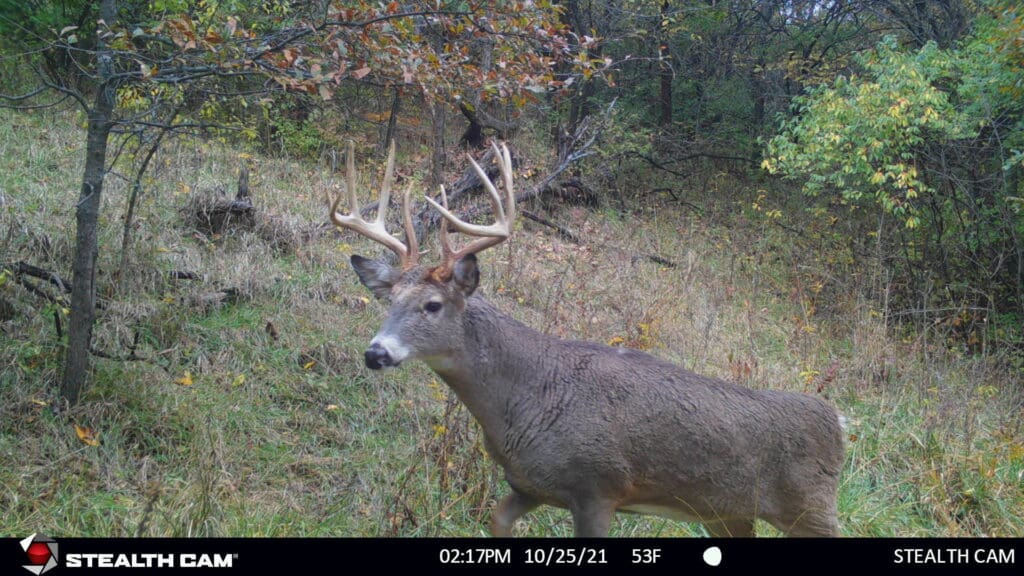
October hunting offers a mixed bag of experiences, ranging from the finest to the most challenging. Some believe there is such a thing as an “October lull”, while others know that’s simply not the case. The notion of the October lull stems from observation that the bucks are not on the same patterns as they were a few weeks prior to the calendar turning to October. There are several things going on this whitetail world, and you need to adjust to the deer. By implementing the right trail camera strategy and a little bit of scouting you will better your odds at seeing that target buck before things really heat up during the rut.
Changing Food Sources
During the month of October, a lot of the preferred food sources are no longer green and as palatable to deer as they were a month ago. Bucks are actively seeking high protein food sources to build a reserve for the upcoming rut, so these are the food sources you need to key in on. The main food sources to key in on are acorns, apples, and fall food plots like turnips. Keying in on those loan oak trees loaded with acorns is my number one place to hang my Deceptor No-Glo Cell Cameras at. Acorns are the preferred food source if they are available this time of year and can draw deer from all over. If you have no acorns close, the next place I would hang my cell cam would be on a heavy trail leading to a food plot. Bucks continue to utilize cover, opting to enter the food plot during the final moments of daylight. To maximize the chances of capturing them within shootable lighting conditions, I prefer to position my cameras along the trail that leads to the plot which allows me to establish the bucks pattern.
Changing Cover
Another big change occurring in the whitetail woods this time of year is the lack of cover. What was once a wood full of understory green brush and trees full of leaves so thick you couldn’t see in is now barren. As the woods open to the point you can see through it the deer will no longer use this as safe place. Finding new areas of heavy cover this time of year is important. When I’m hanging my Fusion-X Pro Cell Cameras this time of year I look for thick patches of CRP or standing corn fields. These are both key places deer will use if available especially if they are located near food and water. I like to find standing corn butted up to the edge of standing timber. I will locate the trails going to and from the corn. Look for the corn stocks break off around chest height. This will tell you that it was more likely a buck using it. I will hang a cell camera just off this path aiming at the corn. If you can key in on a buck using this pattern strike fast. He may not use this bedding location long especially if the farmer harvests the crop.
Scrapes
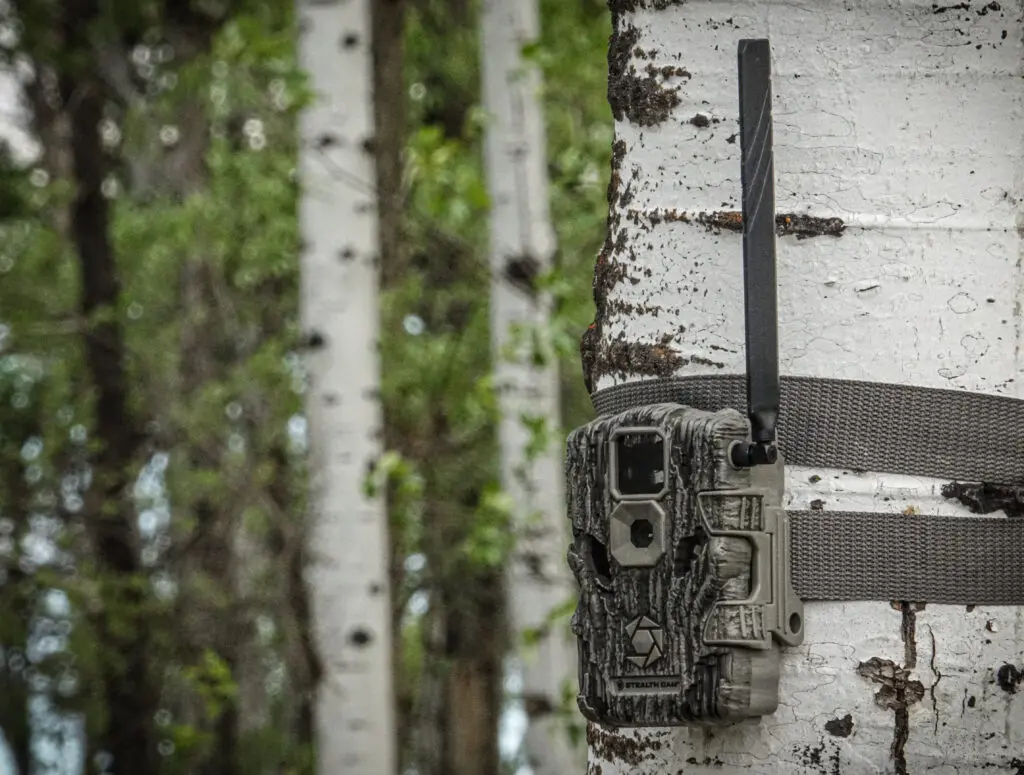
This is my favorite place to hang cell cameras this time of year. Especially the last 2 weeks of October. Whether mock or real scrapes will peak in activity this month. This is because bucks will start to establish the pecking order for the upcoming rut. They use scrapes as a primary source of communication, not only to let other bucks know they are around but also to establish dominance. To locate scrapes, I like to scout my hunting locations in early spring. When doing this I will mark every scrape on my HuntStand app. I then will head to the timber in September and make some mock scrapes in these locations. Don’t be surprised if there is an active scrape in that area when you arrive. If this is the case, your work is done hang a cell camera and monitor the location. If not, I like to use products like The Buck Bomb to create mock scrapes. Once I hang my Stealth Cams I don’t get too excited if they are slow to show activity. Keep in mind scrape activity will pick up every day of the month. It’s better to your scrapes made prior to when things heat up at the end of the month.
In closing, as you can see there are several changes occurring in the month of October. With those changes comes changes in trail camera locations. Don’t be alarmed if a lot more pictures are taken under the cover of darkness especially on field edges and scrapes. I opt to set my cameras to record in video mode. This approach enables me track both the direction of travel and the body language of the bucks. For instance, if the buck appears half an hour past sunset, exhibiting a calm and composed deameanor, I can infer that I’m close to the bedding location. I will then use this information to try intercept him enroute to that location. If I get a picture of him hitting a scrape at 3 am I, then know it’s a game of patience. I will not pressure the area and just wait for the time to be right to move in. Your trail cameras will do the scouting for you. With a little scouting and some patience, you can have some of the best hunts of the year.