
By: David Butler, Stealth Cam Contributor
Spring turkey hunting offers unique challenges, from navigating short seasons and small properties to scouting unfamiliar terrains. In this article, I’ll share the advantages of using trail cameras to scout for spring gobblers, including optimal camera placement, best settings for specific locations, and the prime time to set up your cameras for a successful hunt. During the Illinois spring turkey season, my trail cameras were instrumental in harvesting a great tom off my property. I actually set up against a tree that one of my trail cameras was mounted to and called in a gobbler to 12 steps. The bird ended up weighing 20 pounds, with a 10” beard and 1” spurs! On smaller properties like mine, where turkeys can quickly come and go, trail cameras have proven to be an invaluable asset for consistent success.
BENEFITS OF TRAIL CAMERAS FOR TURKEYS
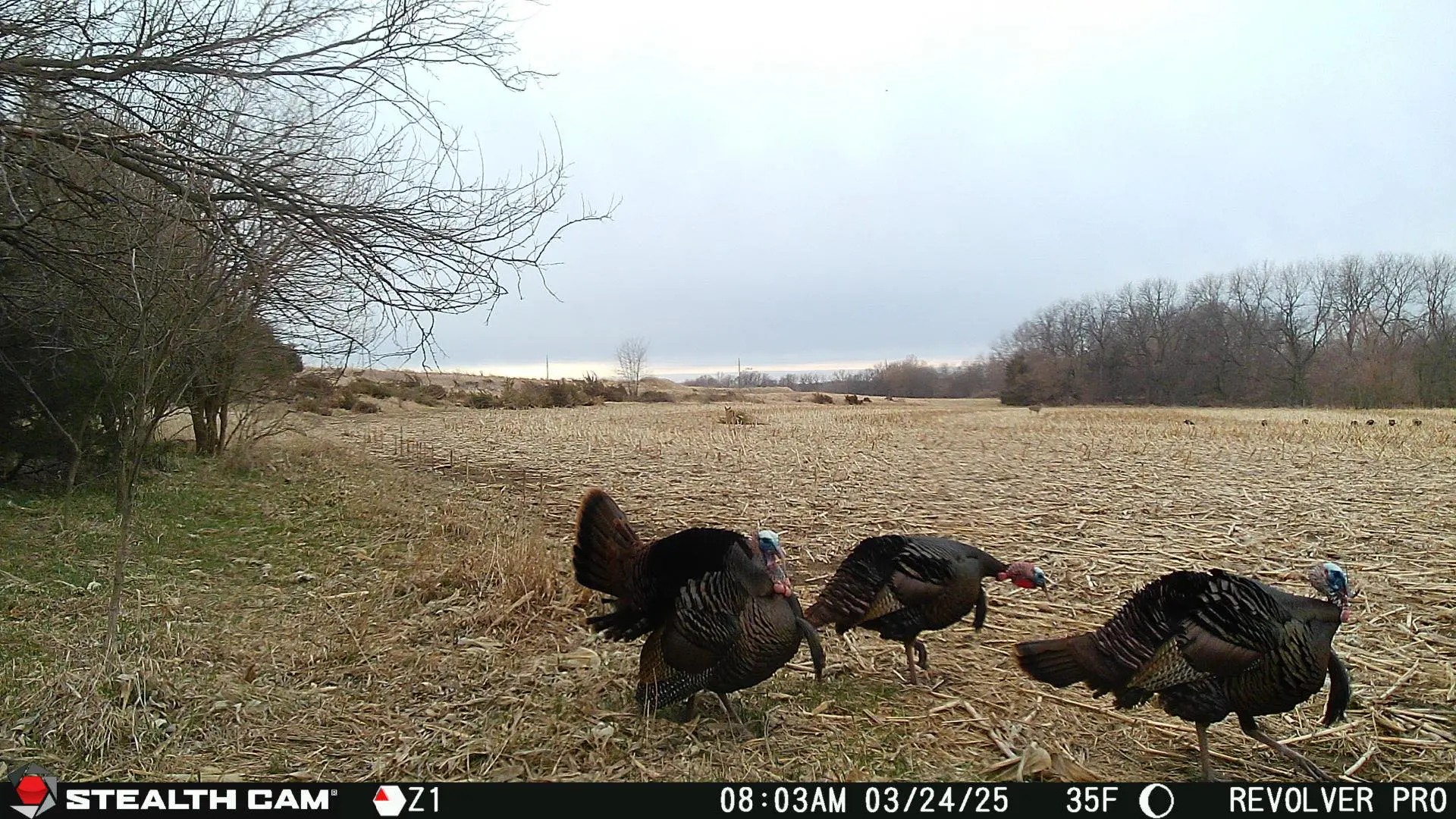
The primary benefit of using trail cameras for turkey hunting lies in the increased efficiency provided by the data they collect. Regardless of your property’s size, these cameras can help pinpoint the best times and locations for hunting, significantly improving your chances of locating and calling in a receptive bird. While it’s possible to call birds from a distance, your odds improve dramatically when you understand their preferred spots, a key insight trail cameras offer. Beyond making hunting more efficient, trail cameras also save time and money, particularly with remote properties. As someone who travels nearly an hour and a half to my own remote hunting ground, I can attest to the time and cost savings. Trail cameras allow me to determine the turkeys’ patterns on my land. Balancing hunting with family and work commitments is essential, and trail cameras aid in maximizing the effectiveness of each hunt with the valuable data they provide.

TRAIL CAMERA LOCATIONS FOR TURKEY
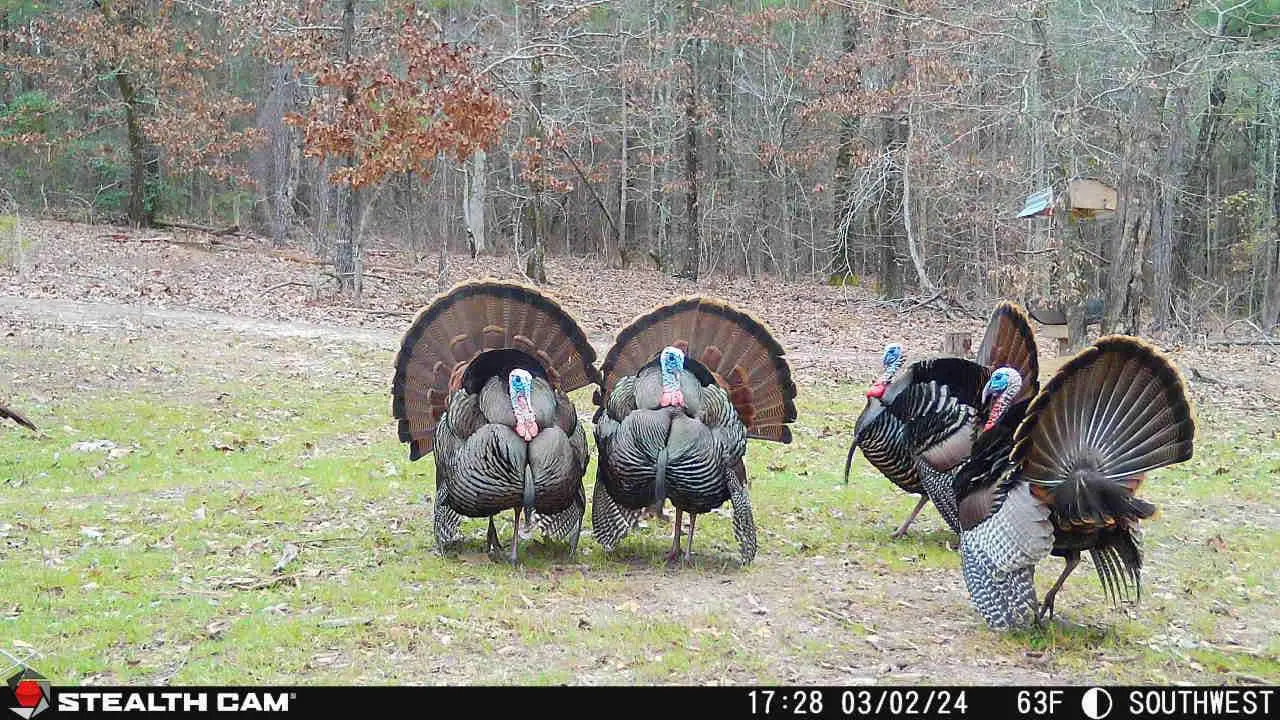
Turkeys tend to have predictable preferences for their habitats. Unlike deer, which favor thick cover, I’ve found that turkeys are drawn to more open spaces. This is largely because turkeys rely on their keen eyesight to detect danger and, for strutting gobblers, to be visible and show off. This makes food plots, agricultural fields, pastures, and open ridges prime spots to place a trail camera. Besides these general open areas, it’s important not to overlook specific food sources. Turkeys are fond of clover, grains, acorns, etc., and hens often lead gobblers to feeding sites right after they fly down from the roost. When scouting a new property or one with which you’re less familiar, trail cameras are invaluable for identifying high-opportunity locations, though you might need to deploy a wide array of cameras to collect comprehensive intel quickly. On familiar properties, where you have existing data on turkey patterns, focusing on known roosting spots, strutting zones, feeding areas, or the paths between them are all effective strategies for camera placement, potentially requiring fewer cameras than on an unknown property.

TOP CAMERA SETTINGS
Time Lapse
Many hunters might not fully utilize the advanced settings available on modern trail cameras, particularly cellular models. Among these settings, some are more apt for certain environments. In expansive spaces like agricultural fields or food plots, relying solely on PIR video or photo settings might limit your captures, as these rely on movement within range to trigger a shot. That’s where the time lapse setting shines. It enables programming your camera to automatically capture images at specific intervals within a set time frame, offering a broader view of activities, like a distant flock of turkeys, that wouldn’t normally trigger the camera.
Pro Tip — If you’re running a Revolver Pro 360º, Time Lapse becomes even more effective: you get both the scheduled captures and a full 360º view to check fields or large open areas for birds. In the Command Pro app, the PIR sensor also remains active during Time Lapse mode, capturing any close-up action triggered by movement.
PIR Photo / PIR Video
These settings are the go-tos for most hunters using trail cameras, and for good reason. They’re versatile across different scenarios, particularly effective for monitoring trails, smaller food plots, or any area where game is likely to come close. For tracking turkeys that might wander into the detection zone, these settings are ideal.
On-Demand
The On-Demand feature, found on most Stealth Cam models, introduces a new level of versatility. Similar to time lapse, it can capture what’s happening beyond the standard detection range, but it also has broader applications. For instance, when approaching an area with a camera installed, activating the On-Demand feature can give you real-time insights, ensure there is nothing out in front of your camera that might bust you.
WHEN TO DEPLOY CAMERAS
There are a lot of factors that can affect when the best time to deploy your cameras is. Take my property for example, I don’t have turkeys year-round. They normally move back in during late March and are there throughout the breeding season. Once the hens are bred, the toms move off, and the hens will raise their poults before moving off in the early fall. So, in my specific situation, even though I run cameras all year long, I don’t move them to turkey specific locations until early to mid-March. When it comes to properties that hold turkeys throughout the entire year, monitoring their whereabouts and patterns all year long is a great way to be prepared when season rolls around.
From my experience, a good general rule of thumb for turkey hunting is to get your cameras deployed at least a month before you plan on hunting. Turkeys can shift their range over time—similar to deer—so the earlier you start, the more likely you are to catch when birds move into your area and begin using a pattern you can track leading into the season.
Trail cameras are an extremely versatile tool that many of us don’t utilize to their full potential. Using them to assist me in being successful during the spring turkey season is just one of the many uses that I have come to take advantage of. If you decide to utilize trail cameras to assist you while turkey hunting this spring, make sure you check your local game laws to ensure using cellular modes and features such as the On-Demand function aren’t going to cause any violations. Good luck and enjoy!
SHOP THE LATEST CAMERAS
Stealth Cam 2.0 models that proved themselves in the whitetail woods last fall are now available at a discounted price. If you’re looking to expand coverage or get cameras running for turkey season, this is a great opportunity to add proven hardware to your setup.
Plus, Revolver Pro 2.0, Deceptor Max 2.0, and Spectre 4K owners will receive future updates unlocking new Command AI features such as PIR Zone Selection and False Trigger Detection, helping reduce noise and deliver more of what you actually want to see from your cameras.