
Public lands offer a unique and challenging environment for hunting enthusiasts. With the increasing popularity of game cameras, specifically cellular cameras, hunters now have a powerful tool for monitoring wildlife activities. However, using these devices on public lands comes with its own set of challenges. Sadly, hunters face many hurdles when simply trying to scout an area to better their hunting chances. It is not as simple as when on private land, where putting up a camera anywhere is more than efficient. When hunting an area accessible to the public, strategies must include preventing theft, all while using the advantages of cellular cameras over traditional game cameras in public land settings.
Challenges of Using Cellular Cameras on Public Land
Public lands attract a diverse range of hunters, and unfortunately, not all share the same ethical standards. One of the primary challenges is the risk of theft. Hunters may find their valuable cellular cameras gone if not adequately secured. On a recent social media post, I watched a noted big game hunter who was aggravated because of being accused of stealing someone’s camera while hunting on public land. He proved he did not take any cameras, yet it is a reminder of some mishaps that can occur when hunting around other hunters. Even when I hunt on private land, I prioritize keeping my camera locations as concealed as possible. The same task is practiced when using cameras around other hunters, not only because of theft but also because keeping my hunting areas a secret from others is critical. To attract deer to my cameras during the off-season while keeping them hidden, I have recently been using innovative products like Evolved’s Dirt Bag Deer Corn, which can be efficient due to being less noticeable to other hunters or potential thieves.
When using cellular cameras on public lands, they are subject to unpredictable weather conditions and natural elements because hunters cannot maintain and check up on them as much as if they were on their land, close to home. Cellular cameras can help hunters obtain key deer movement data with less effort. One negative is that hunters must keep their cameras out for extended periods, so the cameras must be able to withstand harsh weather, including rain, snow, and extreme temperatures. Selecting durable, weather-resistant cameras such as the Stealth Cam Deceptor or Connect is crucial for maintaining functionality in these environments.
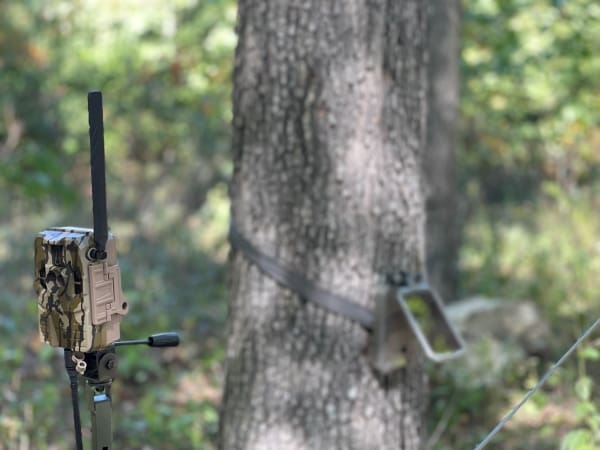
Another common challenge comes from remote locations on public land that may limit access to changing batteries, requiring hunters to manage battery life carefully. Choosing energy-efficient cameras and employing additional power sources, such as Stealth Cam Solar Panels or extended-life batteries, becomes essential for prolonged surveillance.
Preventing Theft and Concealing Cameras
Use high-quality, secure mounts and lockboxes to deter opportunistic thieves. Properly mount the cameras out of reach and camouflage them using natural elements to blend into the surroundings.
Avoid placing cameras in easily visible locations. Opt for spots that provide a clear view of game trails, feeding areas, or watering holes while remaining inconspicuous to other hunters. This helps protect your investment while maximizing surveillance efficiency. Again, products like Evolved’s Dirt Bag Deer Corn offer an additional layer of concealment. Mimicking natural elements, these products help disguise cameras, making them less appealing to potential thieves and minimizing the risk of detection by other hunters.
Best Cellular Camera Locations on Public Land
Game Trails and Water Sources
Positioning cellular cameras along well-traveled game trails and near water sources increases the likelihood of capturing valuable wildlife activity. These areas are natural gathering points for animals and provide comprehensive data for hunters.
Bedding Areas
Placing cameras near bedding areas allows hunters to monitor animal behavior during critical times such as dawn and dusk. This strategic positioning enhances the chances of identifying target species and planning successful hunts.
Remote Corners and Edges
Explore the less frequented corners of public lands to minimize interference from other hunters. Setting up cameras along the edges of these areas provides a more secluded and undisturbed perspective of wildlife movements.

Advantages of Cellular Cameras on Public Land
Cellular cameras provide real-time updates and images, allowing hunters to stay informed without visiting the location. This minimizes disturbances and reduces the risk of spooking game. Cellular cameras offer a more efficient means of collecting data compared to traditional game cameras. Hunters can receive information promptly, enabling them to adjust strategies faster than when checking memory cards days after the data was captured.
The ability to remotely manage cellular cameras through the Command app or other web platforms enhances convenience to an entirely new level. Hunters can customize settings, receive alerts, monitor their cameras from anywhere, and even pair them with the Hunt Stand app, which now allows you to check your Stealth Cam photos through the app. All this new technology and convenience reduces the need for frequent on-site visits.
Effectively utilizing cellular cameras on public lands requires a combination of strategic placement, innovative concealment, and theft prevention measures. By addressing these challenges head-on and leveraging the advantages of cellular technology, hunters can enhance their surveillance capabilities and increase the likelihood of successful and ethical hunts in these public environments.