
Article written by Stealth Cam contributor, Heath Wood
As turkey season approaches, hunters are fine-tuning their strategies to increase the odds of filling those coveted spring tags. One of the most effective tools for boosting your success this season is trail cameras, such as the Revolver 360 and their other cellular line, which are perfect for scouting wild turkeys. Game cameras have been the pinnacle of scouting for deer hunting for many years, yet it seems that hunters did not understand the potential of using them as a scouting tool for turkey hunting until recent years, when cellular cameras became the trend.
Since I was a teenager, my primary method for scouting turkeys has been getting up early in the mornings a few weeks before the season to listen for toms gobbling. That is, until a few years ago, while hunting on a large farm in southern Missouri, I realized the potential and impact of using cellular cameras to become a better turkey hunter. During the weeks leading up to the season, I faced uncertainty about where the toms would be roosting each morning. Typically, turkeys roost in the same general area each night. However, on this occasion, the toms roosted either on the side of the river bottom valley or at the top of the ridge, which required entirely different access routes. Without knowing where the birds were roosting, I had only a fifty percent chance of being in the right spot when it was time for them to fly off the roost.
I became frustrated once the season began; after finding myself in the wrong location, I set up my Stealth Cam cellular camera in one of the two areas where the turkeys roosted. If they showed up on camera the evening before, I would know where to go the next morning. Sure enough, two days later, about an hour before sunset, I captured two gobblers on camera. The following day, I eased into the area as quietly as possible. When the moment came, I made a few tree yelps on a slate call and then waited patiently. After the nearby tom gobbled several times while on the roost, curiosity got the better of him, and he flew down in my direction. I followed up with some soft hen yelps once he was on the ground and within shotgun range. The plan worked!
After my success that day, my Stealth Cam cameras have become vital for scouting spring turkeys. Like me, more hunters are discovering cellular cameras in the spring, which make their scouting tasks much more effective and allow them to stay one step ahead of these tough-to-hunt birds.
Why Use Trail Cameras for Turkey Scouting?
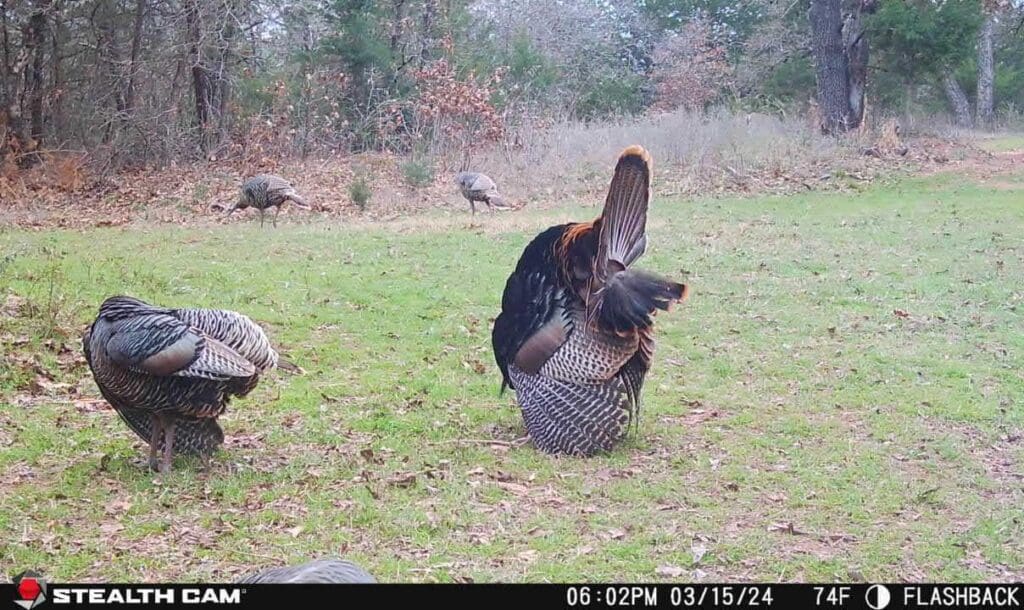
Scouting is a critical component of any successful turkey hunt. While traditional scouting methods, such as glassing fields at dawn, looking for signs during the day, or listening for gobbling early in the mornings, still play an important role, trail cameras provide a 24/7 set of eyes in the woods. By strategically placing Stealth Cam cameras throughout your hunting area, you can gather invaluable data on turkey movement patterns, roosting sites, and daily routines without the pressure of human intrusion.
Setting Up for Success
- Identify Key Areas: Look for natural funnels, strut zones, and food sources like acorn flats, food plots, or green fields. Setting up cameras near known roosting trees can also provide insights into early-morning and late-evening movements.
- Utilize Time-Lapse and Video Modes: Stealth Cam provides time-lapse and video options ideal for open spaces. These features enable you to observe expansive fields where turkeys might not activate a conventional motion sensor, assisting you in tracking bird movements, checking if toms have hens with them, and much more.
- Minimize Disturbance: When setting up cameras, avoid spooking birds by wearing camouflage, moving quietly, and keeping visits brief. Wireless models like the Stealth Cam Fusion, DS4K, or Revolver 360 transmit images or videos directly to your phone, reducing the need to enter the area frequently. This is especially effective in the evenings, preventing birds from being spooked off or away from their roost.
Analyzing the Data
The images and videos captured by your Stealth Cam will help you identify gobblers, track hen movements, and even estimate the size of local flocks. By studying when and where turkeys appear, you can make informed decisions about where to set up on opening day. Combining all of this intel helps gain a strategic advantage when scouting. As with my hunt, try to find where birds roost by placing cameras near potential roosting sites. When used in strut zones, cameras can help determine when gobblers come to these areas to display for their hens. For example, if a gobbler shows up each morning around 10:00 a.m., I hunt near roosting areas early. If I don’t have any luck by 9:00 a.m., I will move near the strut zone and wait for him to appear.
Another effective method for scouting data involves using cameras for a month or more before hunting season. Place them in areas where multiple turkeys are likely to gather, such as a food plot or open field. Early in the season, gobblers stay together in flocks, allowing you to determine how many toms are in your area. As the season approaches, you can track where each of those birds has gone, providing you with more options for hunting locations.
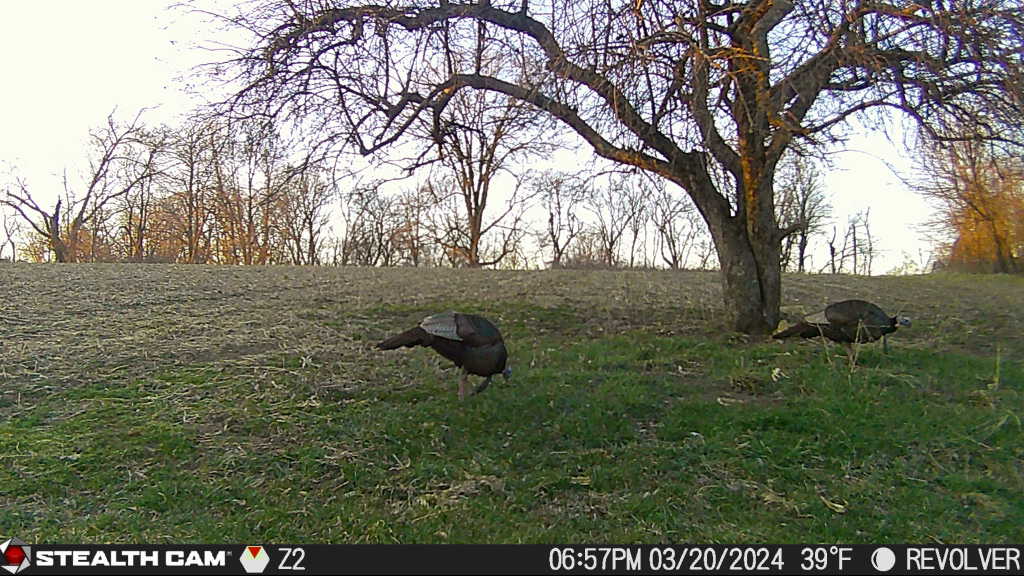
When opening morning arrives, you’ll be equipped with more than just your shotgun or bow; you’ll possess a wide range of understanding of turkey behavior in your hunting area. This level of preparation can make the difference between a long, quiet sit in the woods or leaving with a full tag. Integrating Stealth Cam trail cameras into your scouting routine will enhance your chances of success and maximize your spring turkey season.