
After seeing a feeding buck at the far end of a field, I quickly made a game plan to effectively make a spot and stalk to get within archery range.
It was Missouri’s second day of the season, and temperatures were warmer than desired for an early-season hunter. As I drove myself to the back side of where the buck was feeding, close to half a mile, I parked my truck and began the twenty-minute trek towards the buck. I cautiously took each step, trying to be as quiet as possible while staying concealed as I inched closer to the field edge. With only twenty yards of cover left before reaching the grassy edge, I spotted the buck moments before he dropped out of sight due to the rolling terrain. Once the buck went out of sight, I hurried to get behind a large oak tree a mere ten yards from the field edge. If everything went as planned, the buck would come up the other side of the hill and be within bow range when he reached the top. Sure enough, when I saw the tip of his antlers rising to the crest of the hill, he was only twenty-five yards. Already at full draw, I anxiously waited for the buck to take two more steps to ensure his vitals were fully visible before taking the shot. When the buck finally presented the shot, I squeezed the trigger on my Apex Gear Surge Thumb Release, resulting in a perfect hit. I jumped to my knees in time to see the buck rocking back and forth before tipping over seconds later at fifty yards. It was only September 16th, and I had my buck tag filled!
Early-season whitetail hunting can be challenging at times, yet it can seem exceptionally easy at other times. At the beginning of most seasons, the weather is still hot, bugs are bad, and bucks are moving during the night, most of the time. For the hunter who likes to spend long hours relaxing in the cool autumn breeze while waiting on a deer while sitting in their treestand, the early season may not be their cup of tea; however, if they’re the type of hunter who spends countless hours through the summer scouting and patterning deer, and running numerous game cameras in hopes of laying eyes on a trophy buck. Then, they will likely do whatever it takes to harvest a buck before it is too late.
The best strategies for early-season whitetail hunters typically revolve around food, water, bedding, and finding a buck’s most favorable summer travel routes. Though it may be the basis of early season hunting, if a hunter fine-tunes their efforts, the chances of beating everyone else to the taxidermist is more likely.
Use Game Cameras To Pattern Bucks
Using game cameras through the summer can often be misleading for deer hunters. Many hunters set up multiple cameras over a feeder or in a high-usage food source and take inventory of how many bucks show up. Unfortunately, many hunters do not get the full effectiveness of their cameras and miss out on the prime opportunity to pattern a buck directly in front of their stand.
A game camera like the Stealth Cam Fusion X Pro or Deceptor No-Glo can help find a mature buck in a hunting area. Yet, have the buck’s movements been patterned enough to track it in the first week and make the harvest?
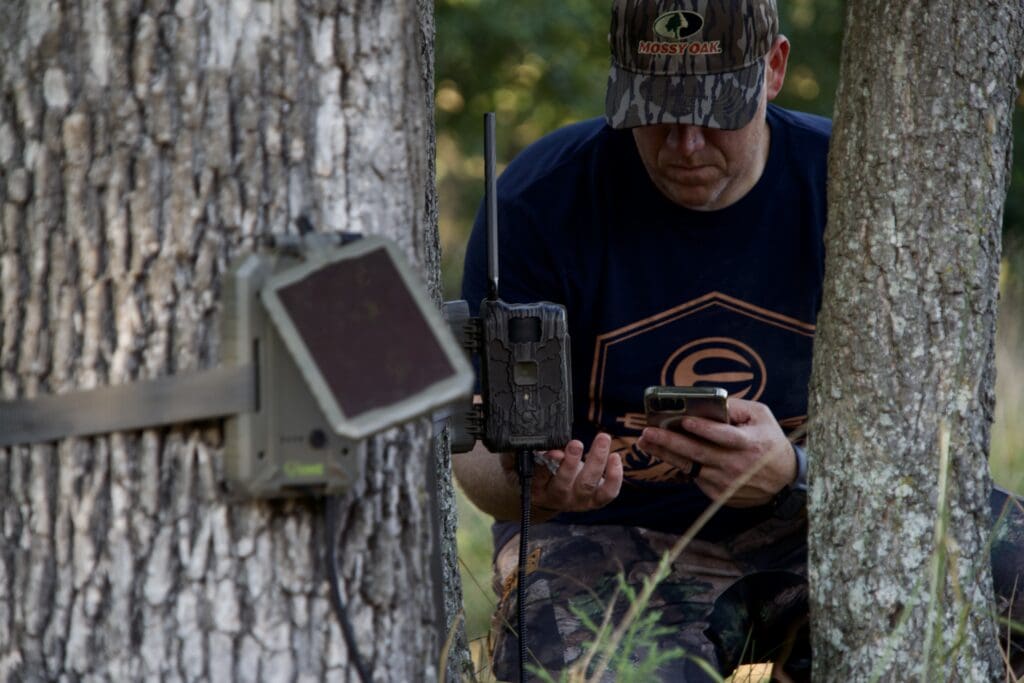
Game cameras are only effective in the way they are used. Instead of only taking inventory of deer in the area, the hunter should use their Stealth Cam cameras to find out where they are going, where they come from, and when they will most likely come by a stand location. To find where deer are moving, cameras must be set strategically, and, more importantly, the photos must be appropriately read to help in planning their next move.
To help learn a buck’s movements, place multiple cameras in some areas, such as near a feeder. Instead of only having a camera facing the feeder, have other cameras facing different areas to learn when the bucks are traveling and where they are coming from. Study photos to see the most desired times that bucks are approaching and if any other mature ones are stalling out of camera range. More mature bucks often avoid the crowd and observe other deer movements. They often never commit to approaching a feeder or where a high quantity of deer resides, resulting in the primary camera never capturing their presence.
Game cameras can also be used to observe large areas of food, such as a food plot or crop fields, to obtain information such as what food mature bucks prefer over another, when they visit the most often, and what time they feed. All the information gathered can be used to fine-tune a stand setup and give the hunter a time frame of when they should be in the stand.
Observe From A Distance, Then Move In For The Shot
Using game cameras to scout and pattern early-season deer movement is hands down one of the most effective methods. However, it shouldn’t be the only one.
As with my spot and stalk hunt mentioned earlier, monitoring deer from a distance and moving to get in bow range quickly can be very effective during the early season. On many occasions, I have sat at a higher vantage point or from a longer distance, watching over a food source or edge of a known bedding area to observe when and where deer are most likely to travel.
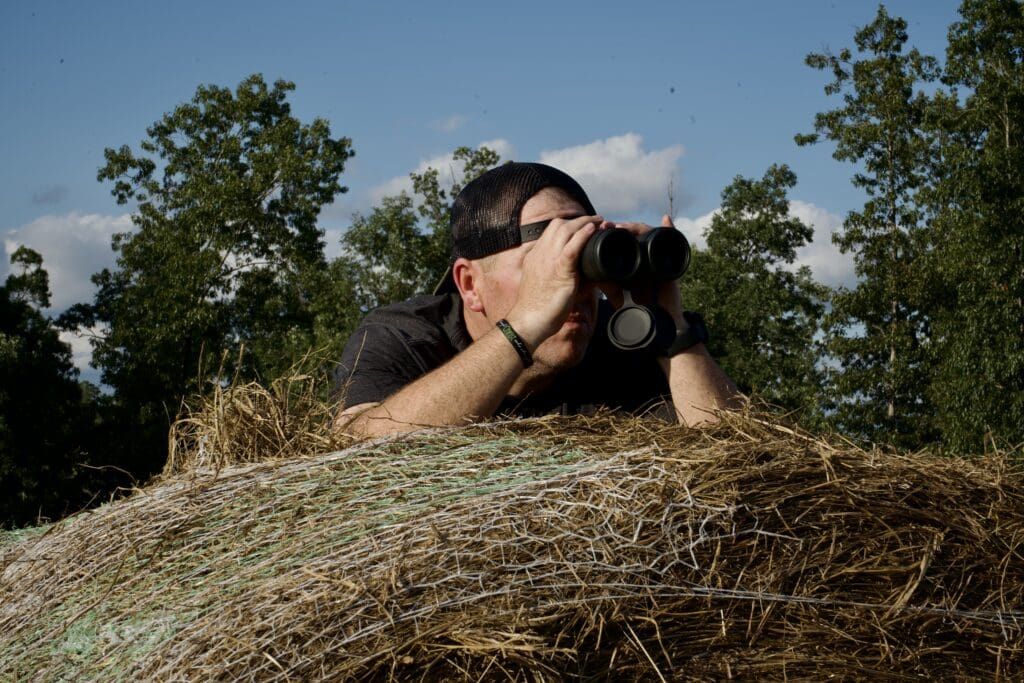
Using a quality pair of optics, such as my Vortex Optics Razor HD binoculars, allows me to monitor deer before the season without them being able to see or smell my presence; I can then monitor their natural everyday movements, mark each location on my Hunt Stand app, and then return later to hunt.
Scouting deer from a distance before the season can be effective, and using binoculars can also be a great way to begin a spot and stalk hunt. Glassing an area from a distance, locating deer, and then planning to ease your way into bow range can be an excellent method to score on a mature buck in the first few days of the season. Again, the Hunt Stand app can help the hunter determine wind direction and the best travel routes without being spotted.
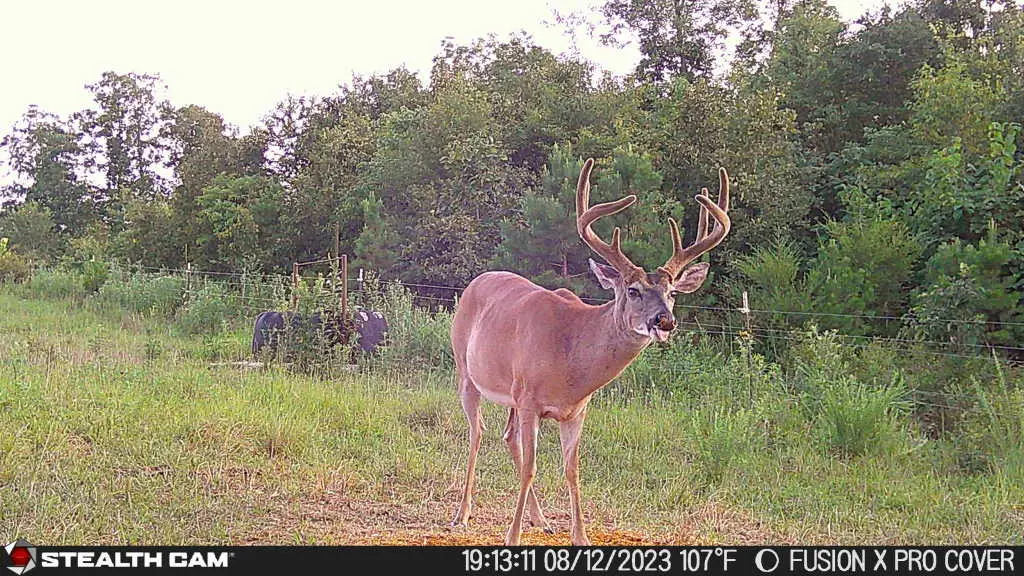
Whether from gathering information throughout the summer with game cameras and scouting with binoculars or spotting a mature buck from a distance during hunting season, by beginning the hunt ready to do whatever it takes, you can catapult into the season by experiencing success early.