
As spring approaches, avid turkey hunters’ minds turn toward the upcoming season. For many, this means embarking on the age-old tradition of scouting, a crucial step in maximizing their chances of a successful hunt. However, effective scouting goes beyond merely stumbling upon turkey tracks or hearing the distant gobble of a tom. To elevate your scouting game and increase your chances of harvesting a turkey, employing a well-designed plan coupled with modern technology is essential.
For many, scouting is cut short for fear of wasting too much time and effort. Yet, for myself, scouting for spring turkeys has become a desired ritual with an excitement level all its own. Drinking a piping hot cup of coffee and sitting on a dirt road while listening to the gobbles echo through the timber is one of my favorite spring pastimes, and I have enjoyed it for many years. Sitting in the shadows from a far distance while watching a tom strut around in his natural environment is another act that is not only an effective scouting technique, but it provides a sense of enjoyment and relaxation for a turkey hunter. Here are three tips to take your spring turkey scouting to the next level while enjoying your time in the field.
Observe From A Distance
The art of scouting begins with keen observation from a distance. Invest in a quality pair of binoculars and scan known turkey habitats for signs of activity. Look out for strut zones, where male turkeys display their dominance to attract mates, which is one of my favorite activities to observe before the season begins. There is something about watching a tom display his dominance and appeal to the nearby hens, hoping they will fall in love with him. By observing gobbler behavior, such as strutting and displaying, you can gauge the stage of the breeding season, helping you tailor your hunting strategies accordingly. For example, if there are several hens with a tom and you observe them for an extended period without any of them getting bred, it may be in the early stages. This rule also applies when gobblers fight each other more than paying attention to the hens; they are still at the beginning of determining who the dominant bird will be. It is incredible what a hunter can learn simply by staying back and watching.
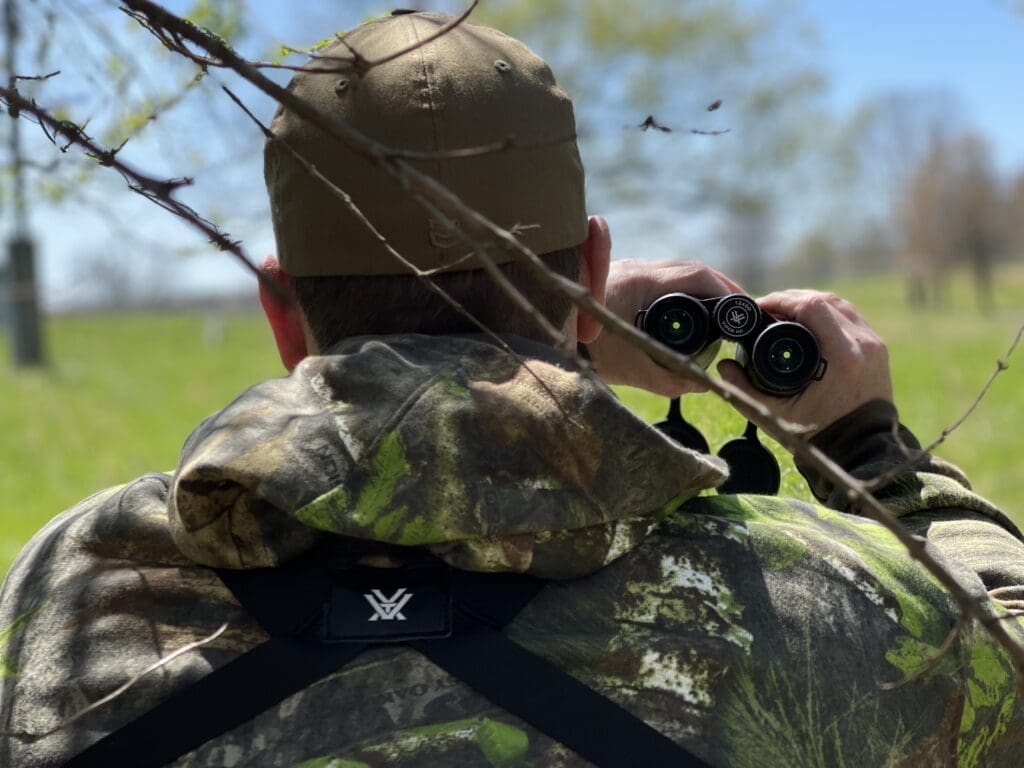
Furthermore, take advantage of the evenings to observe birds and pinpoint turkey roosting locations. Unlike the early mornings when turkeys are often scattered and on the move, evenings offer a more accurate depiction of where turkeys will roost overnight. Utilize tools like the Hunt Stand app to map out roosting areas based on your observations, ensuring you’re in the right place at dawn for optimal hunting opportunities.
Listen In The Evenings
Speaking of evenings and their benefits to a turkey hunter’s scouting arsenal, while the predawn chorus of gobbling toms may be synonymous with turkey hunting, listening in the evenings can provide valuable insights into turkey behavior and roosting patterns. As the sun sets, find an elevated vantage point and listen attentively for the distinctive calls of roosting turkeys. This allows you to pinpoint their exact location, enabling you to set up in the vicinity for the following morning’s hunt.
You can gather critical information that enhances your scouting efforts by leveraging the tranquility of the evening hours. Note the direction and intensity of the calls and any environmental factors that may influence turkey movement. I have often heard Drury Outdoors pro-Mark Drury say that at the moment when the sun is no longer visible and sets, is when he uses a locator call, such as the Hunters Specialties Coyote Locator, to shock a tom into gobbling, moments before flying to the roost. Armed with this knowledge, you’ll be better prepared to intercept turkeys as they leave their roosts at first light.
Use Game Cameras
In the digital age, game cameras have revolutionized how hunters scout for game, including elusive wild turkeys. Strategically placing game cameras in high-traffic areas such as fields, food plots, and known turkey haunts allows you to gather valuable intelligence without disturbing the natural habitat.
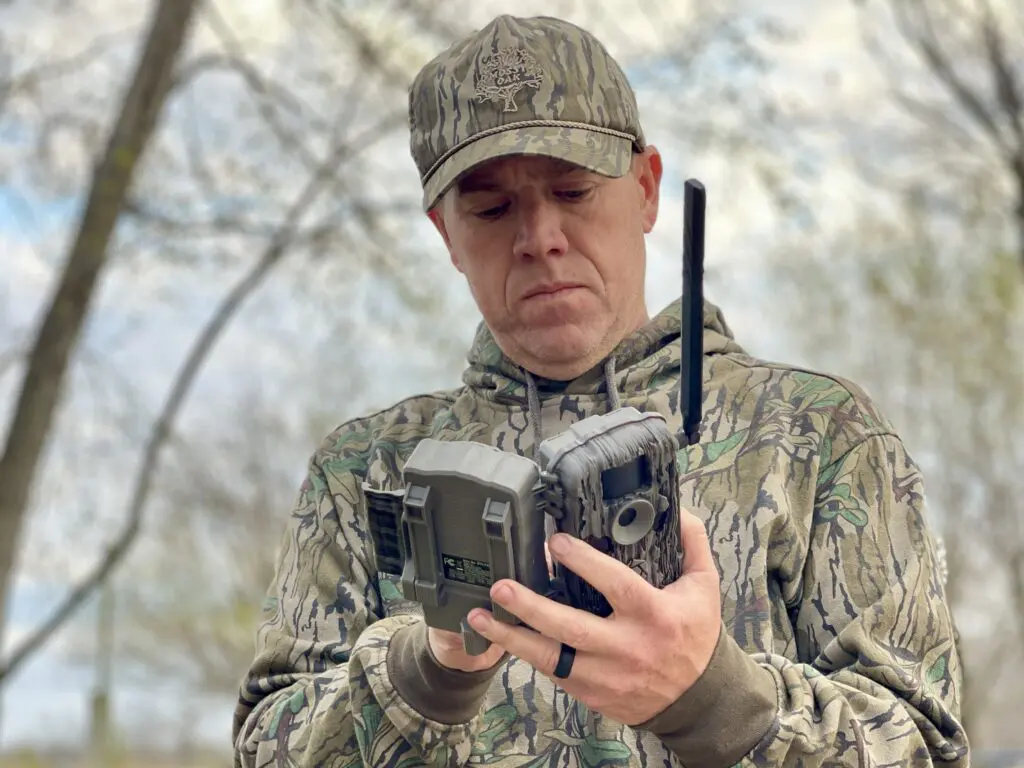
Opt for cellular game cameras equipped with advanced features like instant notifications, such as Stealth Cams Fusion, which offers real-time updates when turkeys are detected in the vicinity. This allows you to adjust your hunting approach accordingly during the season. Reviewing trail camera footage before the season opens provides insights into turkey behavior, including feeding patterns, preferred strut zones, and flock dynamics, empowering you to make informed decisions when hunting.
Effective spring turkey scouting requires patience, observation, and technological prowess. Adopting a proactive approach and incorporating modern tools such as the Hunt Stand app and Stealth Cam cellular cameras into your scouting routine can maximize your chances of a successful hunt. Remember, the key to harvesting a trophy tom lies in the details uncovered during the scouting process. So, gear up, hit the field, and let the hunt begin!