
The buck of every hunter’s dreams steps into the food plot. The rack is unlike anything that’s ever graced your hunting grounds. It sports 7-inch bases, carries impressive mass, boasts 12 tines, and two of those point south off each main beam. The double-drop 12-pointer is the buck every hunter always hopes for, but never see. This time, it was within reach. But you never even knew it was there, because it never walked in front of that traditional, single-zone trail camera. A 360 trail camera would’ve snagged a pic of it, but you hadn’t bought one yet.
Occasionally, a truly revolutionary piece of equipment comes along and changes the game. This is that piece of equipment. Here are 10 reasons why you need a 360 trail cam in your arsenal.
1. BUYING MORE CAMERA FOR LESS MONEY
A 360 camera incorporates six different photo capture zones. Each of these zones represent an individual traditional camera. With the use of a 360 camera, hunters essentially have six cameras in one posting and all for the price of a single cellular trail camera.
To get the same coverage area, you’d have to purchase six different cell cams and post them on the same tree or camera post. Of course, that places trail cameras at different heights, and some of those will not be at optimum elevations and angles.
Because of the nature of a 360 camera, you’re buying more camera for less money. It’d take four to six cell cams (depending on model and aspect ratio) to get that same coverage. Purchasing individual, single-zone cams, you can expect to pay $500-$2,000 (make and model depending). Instead, just pay the price of one.
Occasionally, a truly revolutionary piece of equipment comes along and changes the game. This is that piece of equipment. Here are 10 reasons why you need a 360 trail cam in your arsenal.
2. MONITORING EVERY DIRECTION AT ONCE

The purpose of utilizing a 360 camera is being able to monitor every direction at once. Single-zone trail cameras can miss a lot of deer, especially if located in areas where a 360 camera would shine.
For example, ag fields, bedding areas, benches, bowls, CRP fields, draws, feed stations, food plots, inside field corners, oak flats, thermal hubs, ridge tops, saddles, scrape clusters, staging areas, trail intersections, watering holes, and more, are excellent spots for 360 cameras. These are examples of areas where deer travel in multiple directions. Sometimes, deer even meander. Here, 360 cameras are superior.
3. INCREASING PHOTO CAPTURE ODDS
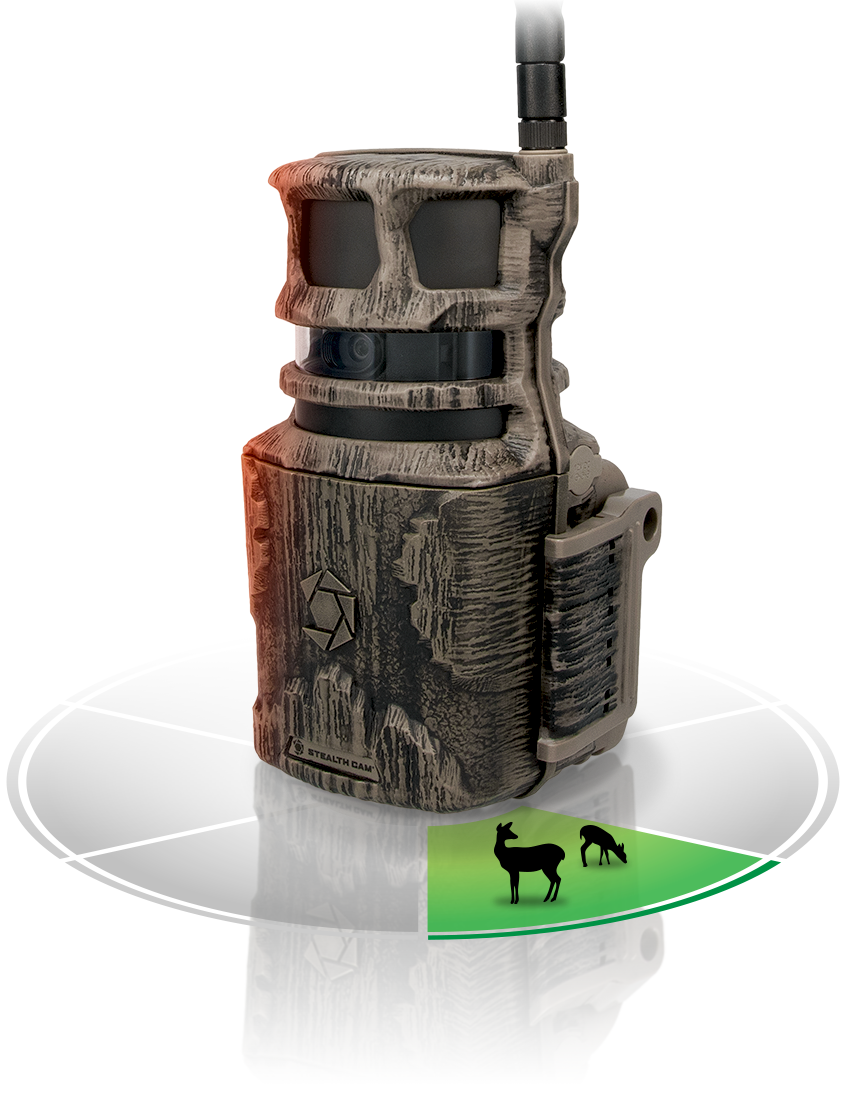
At its core, 360 camera increases the odds of a photo capture. For example, say the 360 camera is pointed front and center toward the primary detection zone, and a buck is in another direction away from where a traditional camera (in the same spot) would be pointed. In that scenario, even if the buck never approached the primary detection zone, a 360 camera snags a photo of it anyway.
It also increases the odds of capturing a photo of a deer that did not enter the detection zone. If another deer within the detection range triggers the camera, a 360 camera might capture a photo of a target buck in the distance that never would have walked closed enough to trigger a traditional, or even a 360, camera.
4. GETTING BETTER COVERAGE ON DIFFICULT-TO-MONITOR SPOTS
Some areas are difficult to capture all deer movement. These areas see deer coming and going in multiple directions, and oftentimes, there isn’t rhyme or reason to the direction they come and go. There might not even be consistency in the directions that they come to and from. The only constant is deer movement. In these cases, a 360 camera can get a pic of a deer that traditional cams would struggle to get or completely miss.
Additionally, 360 cameras also shine in uneven ground. When posting the camera, it might not be angled well to capture photos in one direction, but gets the deer when it goes by the camera to the left, right, or rear.
It also increases the odds of capturing a photo of a deer that did not enter the detection zone. If another deer within the detection range triggers the camera, a 360 camera might capture a photo of a target buck in the distance that never would have walked closed enough to trigger a traditional, or even a 360, camera.
5. GETTING BETTER LINES-OF-MOVEMENT INTEL
The purpose of using trail cameras is to take inventory of the deer herd. But a close second, and equally important effort, is getting reads on whitetail lines of movement.
A whitetail line of movement is that A to B to C travel pattern. For example, A is the bedding area, B is a watering hole in a staging area, and C is a destination food source, such as an agricultural field. Trail cameras help gauge these lines of movements, and the patterns they create. Furthermore, it helps determine quality interception points that make great treestand and hunting blind locations. A traditional cell cam does this well. But a 360 cell camera does it even better.
6. FINE-TUNING TARGET BUCK PATTERNS

Another benefit of trail cameras is fine-tuning target buck patterns. Seeing exactly where it comes from, where it goes to, and the exact trails it takes are all important components of scouting. These elements affect treestand and ground blind locations. That’s especially true when hunting a just-off wind, which requires precision treestand placement, and precision travel pattern prediction.
Traditional cell cams can accomplish this task, but again, 360 cell cams do it better. Because a 360 camera sees in every direction, it’s able to determine exactly which direction the deer came from, which direction it goes to, and the exact trails it takes from point A to B. It captures important details that traditional cameras can’t accomplish.
7. CHECKING SURROUNDINGS VIA ON-DEMAND BEFORE WALKING INTO A TREESTAND
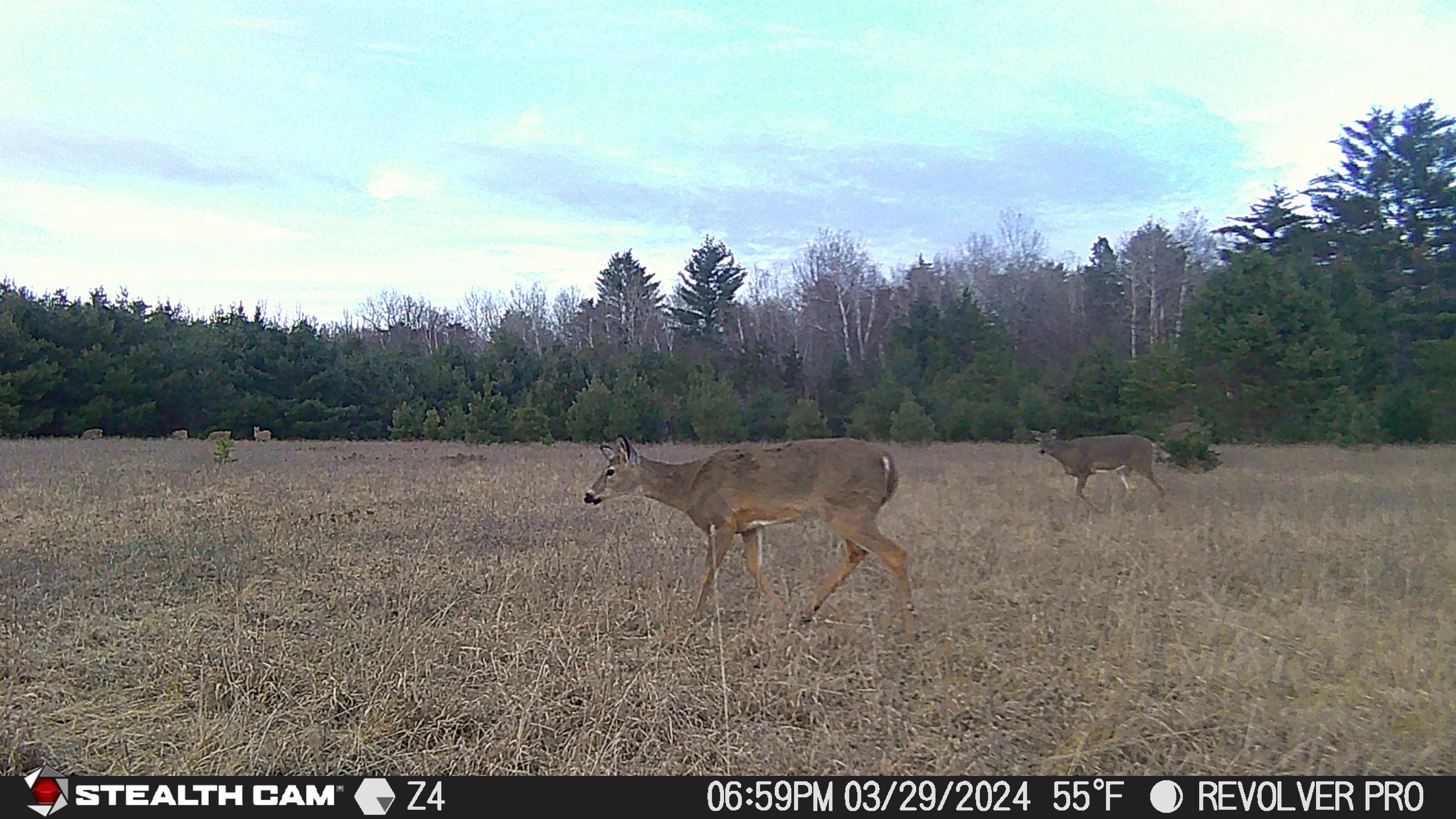
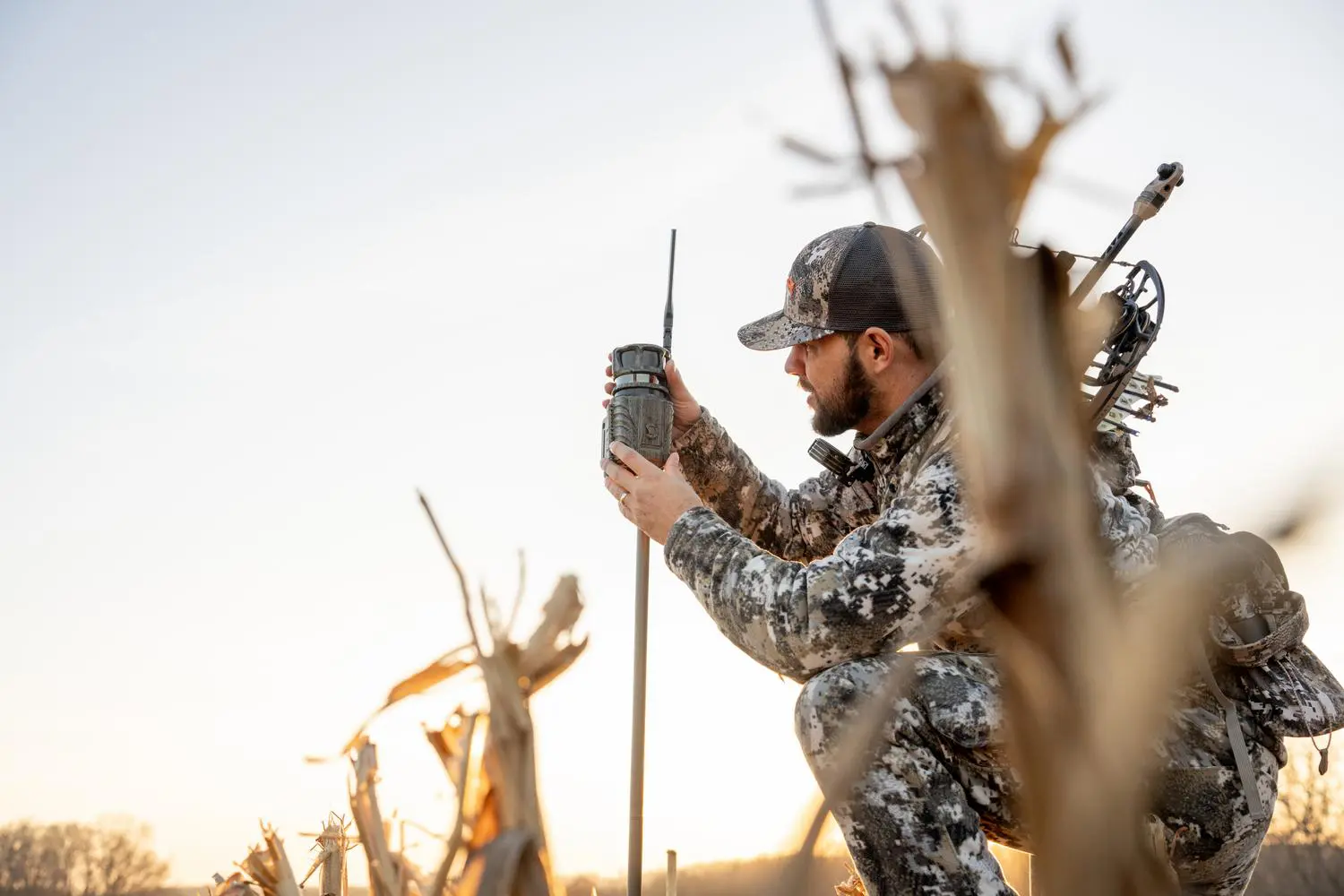
One benefit of a 360 cell cam is a feature that allows on–demand photo triggers. This makes it possible to check surroundings of treestand and hunting blinds before walking in to hunt. This ability can reduce negative encounters with deer. It can minimize the human intrusion and hunting pressure applied to the local deer herd. Furthermore, it gives hunters the ability to hit pause on that entry route and allow deer to filter out of the area before proceeding onward to the treestand.
8. IMPROVING SURVEILLANCE MONITORING ABILITES
Some people use cellular trail cameras for security and surveillance. A 360 cell cam amplifies this ability, especially in certain situations. Sometimes, a 360 camera is better suited for this role than a traditional cam.
For example, old logging roads that cut across multiple properties have a higher risk of trespassing. A 360 cell camera located at that boundary will reveal anyone who is trying to trespass, or anyone trying to circumvent that cell cam located at the property line. This trail camera type is also good to Deploy at gates, driveways, close to road frontage, and any other location where you’d like the camera to see in multiple or all directions.
9. DECREASING RISK OF THEFT
While a 360 cell camera is technically just as easy to steal as a traditional cell camera, it certainly makes it more difficult to do so without positive ID. It’s easier for someone to sneak up behind a traditional camera and snag it without being seen. A properly deployed 360 cell cam is very difficult, if not completely impossible, to sneak up on without it capturing a photo of the individual. Therefore, if it is stolen, you likely have a positive ID on the individual’s face, and the trail camera’s GPS unit should reveal its location (if turned on).
10. CAPTURING COOL PANORAMIC PHOTOS
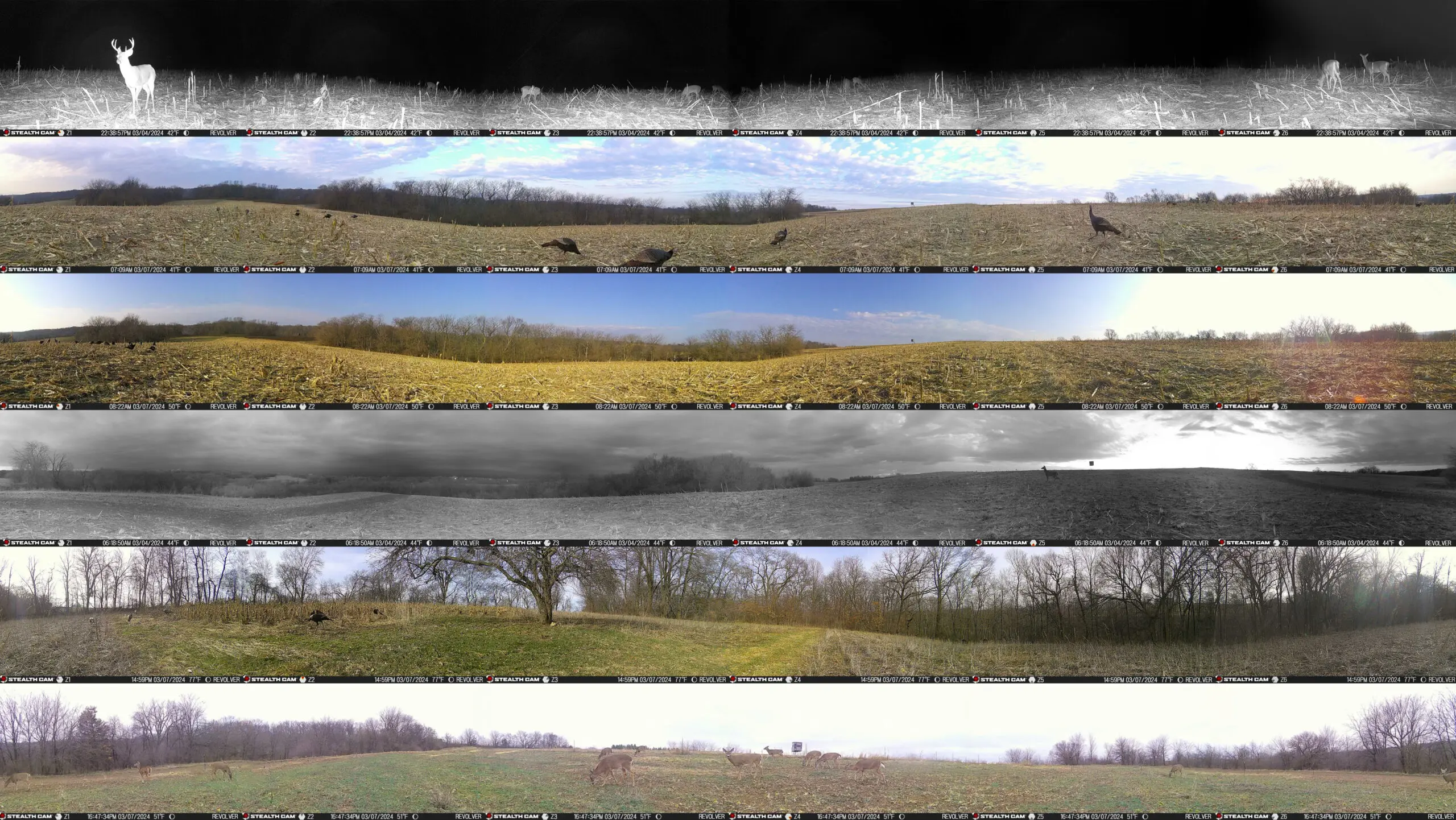
Maybe the coolest element of using a 360 cellular camera is capturing interesting panoramic photos of whitetails and other wildlife. The ability to scout with such incredible efficiency, and the ability to snap unique images, offers a one–two punch that traditional cell cams just can’t match.
DEPLOYING A 360 CELL CAM
Stealth Cam’s Revolver (https://www.stealthcam.com/products/revolver-360-cellular-trail-camera/) and Revolver Pro 360-Degree (https://www.stealthcam.com/products/revolver-pro/) are excellent 360 cell cams.
The Revolver Pro 360-Degree offers the equivalent coverage of six cameras in one device. Incredibly, it captures 4-, 8-, 16-, or 40-mp photos or 1440P QHD video with audio. It operates with a silent, pivoting motor, and it snaps photos in all six zones. That said, you can choose from single-zone, 180-zone, or 360-zone capture modes. It has burst mode and timelapse capabilities.
The 360-degree feature works 24 hours per day. It incorporates four power LEDs, an 80-ft detection range, and a 0.4-second trigger speed. It comes with an integrated GPS, and shares its coordinates. The camera runs on 16 AAs via a dual-cartridge system. It also has a 12V DC auxiliary jack, optional T-post mounting bracket (included), and a ¼-inch threaded mount. It’s compatible with AT&T and Verizon. Paired with the Command Pro App (https://www.stealthcam.com/app/), this cam is ideal for deployment on your hunting properties.
If a 360 cell cam sounds like the right buy for you, it’s time to get to work. Order your cameras, and prepare for deployment. At the sake of sounding cliché, this groundbreaking 360 cellular trail camera technology really has changed the camera landscape. Hunters and Land managers now have another tool in their arsenal that they did not have before. And that’s the biggest reason why you need a 360 cellular trail camera.